on March 02, 2026

If you have been scrolling through supplement shelves — physical or digital — lately, you already know the struggle. There are hundreds of Omega-3 products out there, each one claiming to be the cleanest, the most potent, the most bioavailable. And honestly? Most of them are banking on the fact that you do not know the difference. Well, that ends today.
This guide breaks down everything you need to know to actually find the best Omega-3 supplement in 2026: what to look for on the label, which forms work better in your body, what the latest science says, and the red flags that should send you running in the other direction.
Why Omega-3 still matters — and maybe more than ever
Let us be real: Omega-3 fatty acids are not a trend. They have been studied extensively for decades, and the research keeps stacking up. The two that matter most for human health are EPA (eicosapentaenoic acid) and DHA (docosahexaenoic acid). These long-chain fatty acids are essential — meaning your body cannot produce them on its own in meaningful quantities, so you have to get them from food or supplements.
The science behind Omega-3s covers a wide range of health outcomes. Cardiovascular health has the most robust evidence base, with multiple large-scale meta-analyses confirming that sufficient EPA and DHA intake is associated with reduced triglyceride levels and lower risk of cardiac events. Beyond the heart, DHA is a structural component of brain tissue and the retina, making it critical for cognitive function and eye health. More recent research is also exploring the role of EPA in mood regulation and inflammation management.
The problem is that most people are not getting enough. Modern diets, particularly in regions where fatty fish is not a staple, tend to be heavily skewed toward Omega-6 fatty acids — found in processed vegetable oils — and chronically low in Omega-3s. This imbalance in the Omega-6 to Omega-3 ratio is an area of growing concern in nutritional science.
The form question: fish oil, krill oil, or algae?
This is where things get interesting, and where a lot of buyers go wrong.
Fish oil is the most common source and comes in two main molecular forms: ethyl ester (EE) and triglyceride (TG). Here is the thing the label often does not make obvious — the triglyceride form is significantly better absorbed by the body. Multiple studies show that re-esterified triglyceride (rTG) fish oil can deliver absorption rates up to 70% higher than the ethyl ester form. Ethyl ester is cheaper to produce, which is why budget products default to it, but you are essentially paying for Omega-3s you are not fully absorbing.
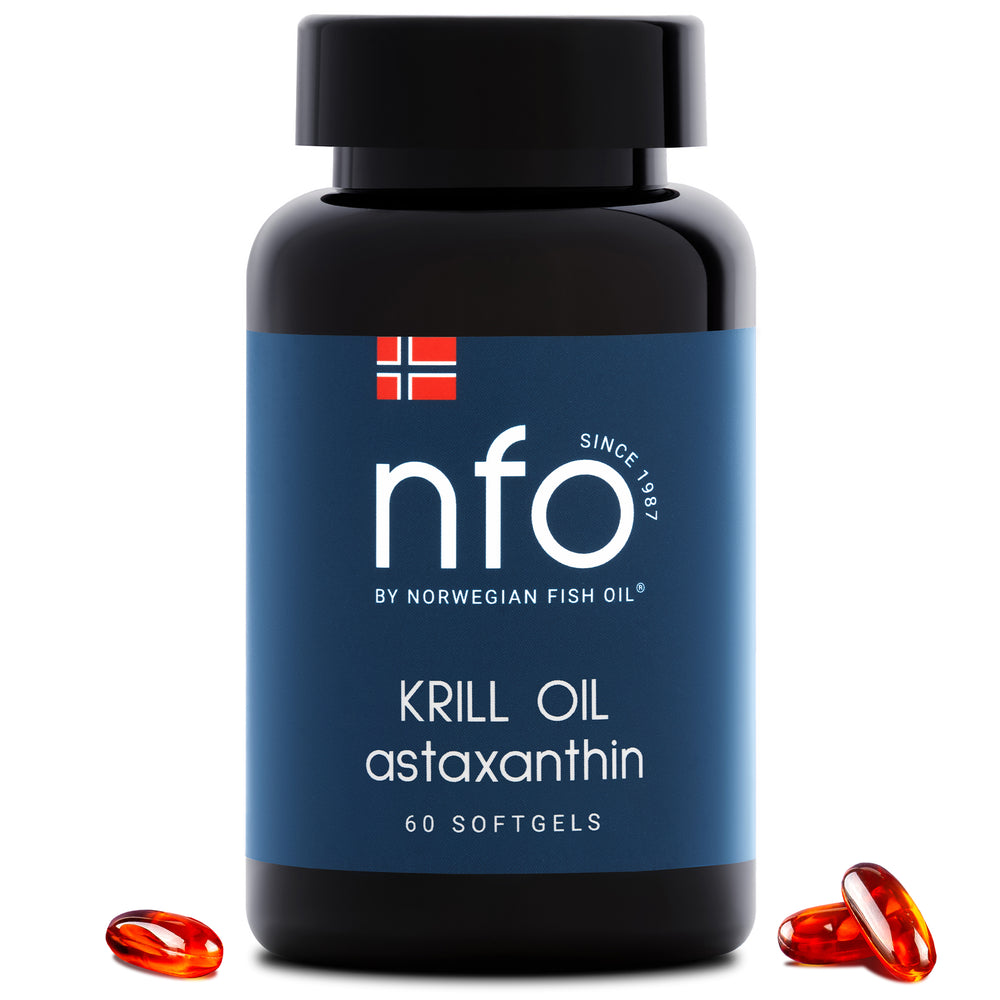
Krill oil is having a genuine moment in 2026, and for good reason. Krill oil contains EPA and DHA bound to phospholipids rather than triglycerides, which some research suggests may enhance delivery to the brain and cells. It also naturally contains astaxanthin, a potent antioxidant that helps protect the oil from oxidation. The downside? It is more expensive, and the total EPA/DHA content per capsule is typically lower than high-quality fish oil, so you may need to take more.
Algae oil is the one that has really levelled up in recent years. As the original source of Omega-3s in the marine food chain — fish get their EPA and DHA by eating algae — algae-based supplements are a clean, sustainable, and genuinely effective option. They are also the only option for vegans and vegetarians that delivers both EPA and DHA (as opposed to ALA from flaxseed, which converts to EPA and DHA very poorly in the human body). Advances in fermentation technology have made algae oil far more potent and cost-effective than it was even five years ago.
What to actually look at on the label
Most people look at the wrong number. They see "1000mg fish oil" and think that means 1000mg of Omega-3. It does not. What you want is the combined EPA + DHA content per serving.
A quality supplement should deliver at least 500mg of combined EPA and DHA per capsule. Many leading products in 2026 offer 600–1000mg per capsule. For therapeutic purposes — such as managing high triglycerides under medical supervision — doses of 2000–4000mg of EPA+DHA per day are commonly studied.
Other things worth checking:
Oxidation levels. This is the one almost nobody talks about, but it matters enormously. Fish oil oxidizes over time, and rancid fish oil is not just ineffective — it may actually be harmful. Look for products that publish their TOTOX (total oxidation) values. Anything under 26 is considered acceptable by industry standards; the best products sit well below this threshold. That fishy burp? Often a sign of oxidation, not just the fish source.
Third-party testing and certifications. Look for certifications from bodies like IFOS (International Fish Oil Standards), NSF International, or USP. These verify purity, potency, and contamination levels — including heavy metals like mercury, PCBs, and dioxins.
Concentration. A high-concentration product means fewer capsules for the same dose. Some products require you to take four or five capsules to hit therapeutic ranges; others get there in one or two. Higher concentration usually means a cleaner, more refined product.
Sustainability. With ocean health becoming an increasingly urgent issue, sourcing matters. Look for MSC (Marine Stewardship Council) certification or equivalent, which indicates responsible, traceable fishing practices.
The red flags — what to avoid
You have options, and some of them are genuinely not worth your money or your health. Here is what to watch out for:
A product that lists only "fish oil Xmg" without breaking down the EPA and DHA content is not being transparent, and that alone should make you suspicious. Equally, a product with a suspiciously low price point is almost certainly using ethyl ester oil at low concentrations — the math just does not work otherwise.
Avoid anything with a strong, unpleasant fishy smell straight out of the bottle. Fresh, high-quality fish oil should have a mild, clean scent. Enteric coating can help with burping but does not fix an oxidized product — it just delays when you taste it.
Be wary of proprietary blends that lump Omega-3s in with other ingredients without giving you a clear breakdown of what you are actually getting.
Dosage: how much do you actually need?
General health maintenance: most health authorities point to around 250–500mg of combined EPA and DHA per day as a baseline for healthy adults. The American Heart Association suggests at least two servings of fatty fish per week, which translates to roughly 500mg of EPA+DHA daily from food alone.
For specific health goals — reducing elevated triglycerides, supporting mental health, or managing inflammation — higher doses are commonly used in clinical settings, often in the 1000–4000mg range, and should ideally be discussed with a healthcare provider.
Always take Omega-3 supplements with a meal containing fat. This significantly improves absorption, particularly for ethyl ester forms.
The 2026 landscape: what is new
The supplement industry in 2026 has seen a notable shift toward ultra-concentrated, single-serve formats — think liquid shots and high-dose softgels rather than multiple capsules. Personalized nutrition testing, which analyses your Omega-3 index (a measure of EPA and DHA as a percentage of total fatty acids in red blood cell membranes) through simple at-home blood spot tests, has also become far more accessible. This allows you to actually verify whether your current intake is working, rather than guessing.
Algae-derived EPA specifically has expanded dramatically in the market, historically lagging behind DHA in algae products but now available in meaningful concentrations from several producers.
The bottom line
Finding the best Omega-3 in 2026 is not about finding the flashiest brand or the cheapest price per capsule. It is about knowing what you are looking at. Prioritize the triglyceride or phospholipid form, check the actual EPA and DHA content, verify third-party testing, and consider your diet and specific health goals before choosing a dose. And if you follow a plant-based diet, algae oil is not a compromise — in many ways, it is the smarter choice.
Your future self, with a healthier heart, sharper mind, and less inflammation, will thank you for doing the homework.
References
Bäck, M. (2017). Omega-3 fatty acids in atherosclerosis and coronary artery disease. Future Science OA, 3(4), FSO236. https://doi.org/10.4155/fsoa-2017-0067
Canhada, S., Castro, K., Perry, I. S., & Luft, V. C. (2018). Omega-3 fatty acids' supplementation in Alzheimer's disease: A systematic review. Nutritional Neuroscience, 21(8), 529–538. https://doi.org/10.1080/1028415X.2017.1321813
Dyall, S. C. (2015). Long-chain omega-3 fatty acids and the brain: A review of the independent and shared effects of EPA, DPA and DHA. Frontiers in Aging Neuroscience, 7, 52. https://doi.org/10.3389/fnagi.2015.00052
Gorjão, R., Azevedo-Martins, A. K., Rodrigues, H. G., Abdulkader, F., Arcisio-Miranda, M., Procopio, J., & Curi, R. (2009). Comparative effects of DHA and EPA on cell function. Pharmacology & Therapeutics, 122(1), 56–64. https://doi.org/10.1016/j.pharmthera.2009.01.004
Helseth, R., Søbstad, J., & Flo, A. (2021). Bioavailability of marine omega-3 fatty acids from a krill oil versus fish oil supplement: A single-dose, crossover study. Lipids in Health and Disease, 20, 132. https://doi.org/10.1186/s12944-021-01562-x
Ismail, A., Bannenberg, G., Rice, H. B., Schutt, E., & MacKay, D. (2016). Oxidation in EPA- and DHA-rich oils: An overview. Lipid Technology, 28(6–7), 55–59. https://doi.org/10.1002/lite.201600026
Mozaffarian, D., & Wu, J. H. (2011). Omega-3 fatty acids and cardiovascular disease: Effects on risk factors, molecular pathways, and clinical events. Journal of the American College of Cardiology, 58(20), 2047–2067. https://doi.org/10.1016/j.jacc.2011.06.063
Raatz, S. K., Redmon, J. B., Wimmergren, N., Donadio, J. V., & Bhatt, D. L. (2009). Enhanced absorption of n-3 fatty acids from emulsified compared with encapsulated fish oil. Journal of the American Dietetic Association, 109(6), 1076–1081. https://doi.org/10.1016/j.jada.2009.03.009
Swanson, D., Block, R., & Mousa, S. A. (2012). Omega-3 fatty acids EPA and DHA: Health benefits throughout life. Advances in Nutrition, 3(1), 1–7. https://doi.org/10.3945/an.111.000893
Yurko-Mauro, K., McCarthy, D., Rom, D., Nelson, E. B., Ryan, A. S., Blackwell, A., Salem Jr., N., & Stedman, M. (2010). Beneficial effects of docosahexaenoic acid on cognition in age-related cognitive decline. Alzheimer's & Dementia, 6(6), 456–464. https://doi.org/10.1016/j.jalz.2010.01.013