on March 06, 2026

Let us start with an uncomfortable truth. The traditional Czech diet is extraordinary in many ways — rich in flavour, deeply tied to cultural identity, and built around ingredients that have sustained generations. But when it comes to one specific and genuinely essential nutrient, it has a serious structural blind spot. Long-chain Omega-3 fatty acids — EPA and DHA specifically — are almost entirely absent from the way most people in the region eat. The average fish consumption sits at fewer than one portion per week, which is roughly half the European Union average and a fraction of what populations with excellent Omega-3 status consume. The consequences show up directly in the blood: research has confirmed that the Czech population records a mean Omega-3 index of around 3.56%, firmly in the "very low" category by global standards.
So the question is not really whether you need more Omega-3. The data answers that conclusively. The real question is how you get it — and whether a capsule can genuinely do what a plate of grilled mackerel would.
Why EPA and DHA are not optional
Before weighing up the options, it is worth being clear about why long-chain Omega-3s matter so much in the first place. EPA (eicosapentaenoic acid) and DHA (docosahexaenoic acid) are not interchangeable with the Omega-3 found in plant foods like flaxseed or walnuts. That form — ALA (alpha-linolenic acid) — converts to EPA and DHA in the body at a rate so poor (typically below 5–10% for EPA, and almost negligible for DHA) that it cannot be treated as a meaningful source of the nutrients your heart and brain actually need.
DHA is the primary structural fatty acid of brain tissue and the retina. EPA is the body's main anti-inflammatory long-chain fatty acid, involved in the eicosanoid pathways that regulate inflammatory response, mood, and vascular function. A chronic shortage of both is linked to elevated cardiovascular risk, faster age-related cognitive decline, increased systemic inflammation, and impaired visual function. These are not minor inconveniences. They are long-term health trajectories.
The case for fish — and the Central European reality
In an ideal world, fatty fish would be the primary answer. The nutritional case is strong. A single 150g portion of Atlantic mackerel delivers roughly 3,000–4,000mg of combined EPA and DHA. Herring and sardines are comparably rich. Even salmon — the most accessible fatty fish for most consumers — provides 1,500–2,500mg per serving. Beyond the Omega-3 content, fatty fish offers a complete nutritional package: high-quality protein, selenium, iodine, vitamin D, and vitamin B12. It is, in purely nutritional terms, one of the most efficient foods a human being can eat.
But there is a significant gap between what the science recommends and what ends up on the plate in Central Europe. Fish consumption in the Czech Republic and surrounding landlocked countries averages 6–8 kg per person per year. To put that in perspective, the recommended intake for meaningful cardiovascular protection corresponds to at least two portions of fatty fish per week — which would require around 15–20 kg annually. Most people in the region are eating less than half that.
The barriers are not trivial. Geographical distance from the coast means fresh marine fish is expensive, logistically complex to supply, and often unfamiliar as a cooking ingredient to those who did not grow up with it. Cultural food norms run deep. A country where pork schnitzel and svíčková are cornerstones of the cuisine is not going to pivot to grilled mackerel twice a week based on nutritional guidance alone. Freshwater fish — carp, trout, perch — are more locally embedded and culturally familiar, but they contain meaningfully lower levels of EPA and DHA than marine fatty fish, which limits their effectiveness as a primary Omega-3 strategy.
Can capsules actually compensate?
This is where the debate gets interesting — and where the evidence is genuinely encouraging.
High-quality Omega-3 supplements, when used correctly, are demonstrably effective at raising the Omega-3 index. Studies consistently show that supplementation with combined EPA and DHA at doses of 1,000–3,000mg per day produces measurable improvements in blood Omega-3 levels within eight to twelve weeks. Research on the global Omega-3 gap suggests that raising an index from the 4% range to the desirable 8% threshold requires an additional daily intake of approximately 1.4g of EPA and DHA — a target that is entirely achievable through supplementation, even without any dietary change.
This is significant context for Central European consumers. For a population whose Omega-3 status is critically low and whose dietary habits around fish are unlikely to transform overnight, supplementation is not a fallback option. It is, for many people, the most realistic primary intervention available.
That said, not all supplements are equal, and the details matter enormously.
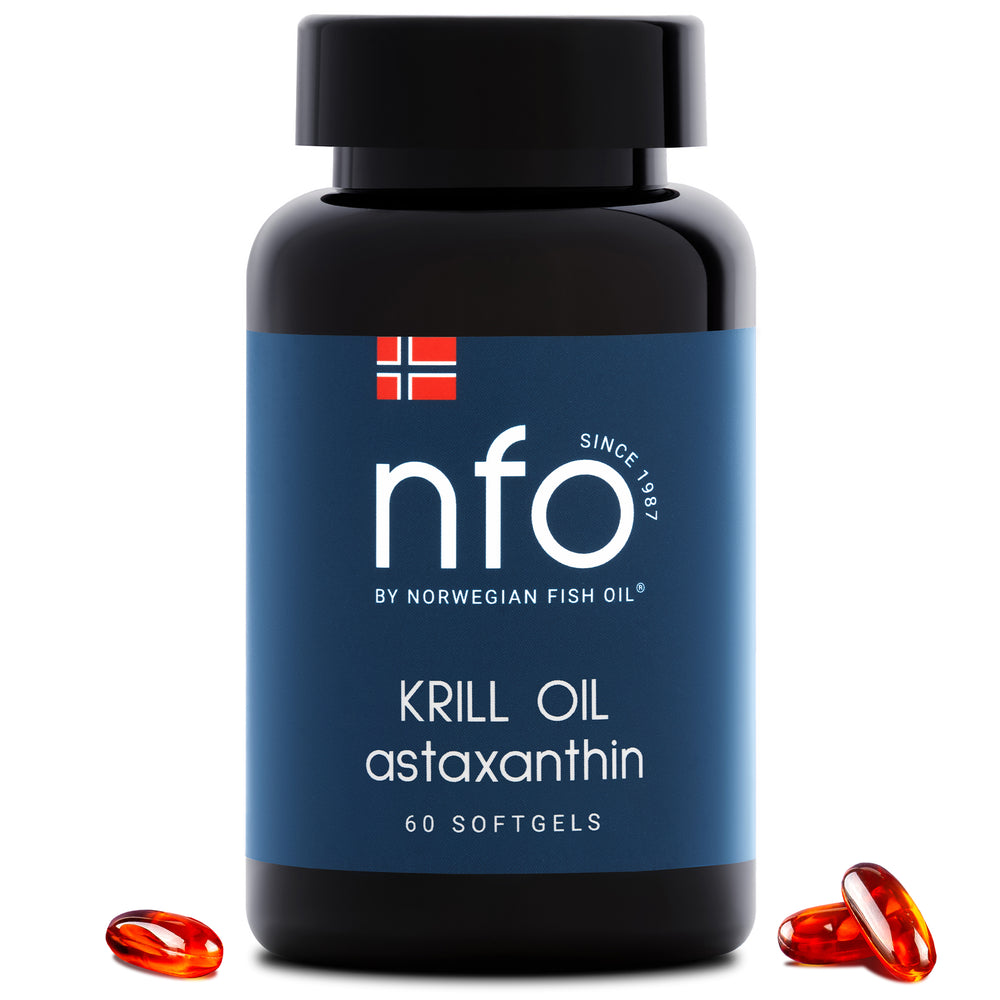
Form matters more than most labels admit. Fish oil supplements come in two main molecular forms: ethyl ester (EE) and triglyceride (TG). The triglyceride form — and specifically re-esterified triglyceride — absorbs significantly better, with some studies showing absorption rates up to 70% higher than ethyl ester equivalents. Many budget products use the ethyl ester form because it is cheaper to produce. If the label does not specify the molecular form, assume it is ethyl ester. Krill oil, which delivers Omega-3 bound to phospholipids, also shows strong bioavailability and may have particular advantages for brain tissue delivery.
Dose is where most people fall short. A standard "1000mg fish oil capsule" typically contains only 300mg of combined EPA and DHA. To reach a therapeutically meaningful dose of 1,000–2,000mg of EPA+DHA, you would need three to six of those capsules daily. This is why reading the nutritional breakdown — not just the headline weight — is non-negotiable.
Oxidation is the hidden quality killer. Fish oil is highly susceptible to oxidation, and rancid oil is not merely ineffective — there is emerging evidence that highly oxidised fish oil may have adverse effects rather than beneficial ones. A fishy odour on opening is a reliable sign of oxidation. The best products publish their TOTOX (total oxidation) values; look for figures well below the industry threshold of 26. Enteric-coated capsules reduce the burping associated with fish oil but do not address oxidation at the source.
Third-party certification is the shortcut to trust. Look for independent testing certifications such as IFOS (International Fish Oil Standards), NSF International, or equivalent. These verify that the product contains what it claims, at the concentration stated, and is free from contaminants including heavy metals and PCBs.
What the evidence actually recommends
The scientific literature does not position fish and supplements as adversaries — it treats them as complementary strategies within a broader nutritional framework. The optimal approach for someone in a landlocked, low-fish-consumption context is to pursue both, rather than treating the question as an either/or.
Practically, this means increasing fatty fish intake toward two portions per week wherever possible — using preserved options like tinned sardines, tinned mackerel, or jarred herring to bypass the freshness and cost barriers that make fresh fish inaccessible for many households. These preserved formats retain their Omega-3 content well and represent genuinely affordable, convenient nutrition. A 120g tin of sardines delivers roughly 1,500–2,000mg of EPA and DHA and costs a fraction of what a fresh fish fillet does.
At the same time, a well-chosen supplement with a meaningful dose of combined EPA and DHA — taken daily with a fat-containing meal to maximise absorption — provides the consistent, measurable baseline that dietary intake alone rarely achieves reliably. For those following plant-based diets, algae oil is the evidence-based equivalent, delivering genuine EPA and DHA rather than relying on the body's limited ALA conversion pathway.
The most precise approach — and increasingly an accessible one — is to test your Omega-3 index directly using an at-home blood spot card, establish your baseline, and adjust your combined food and supplement strategy to move toward the desirable range above 8%. This removes the guesswork entirely and grounds your choices in your actual biology rather than general population averages.
The honest bottom line
Neither fish nor capsules wins this debate outright, because the question assumes a competition that the evidence does not support. What is clear is this: the traditional Central European diet, as it stands, leaves a significant and consequential Omega-3 gap. Fatty fish, eaten consistently, is the gold standard for closing it. But in a food culture where that standard is structurally difficult to meet, high-quality supplementation is not a compromise — it is a legitimate, well-evidenced strategy that works.
The worst outcome is doing neither. The second-worst is taking a low-dose, low-quality supplement and assuming the box has been ticked. The best outcome is an honest look at what you are actually eating, a clear-eyed assessment of what supplementation can add, and a commitment to both — not as a health trend, but as a long-term investment in the parts of your body that quite literally cannot function without these fatty acids.
References
- Calder, P. C. (2015). Marine omega-3 fatty acids and inflammatory processes: Effects, mechanisms and clinical relevance. Biochimica et Biophysica Acta (BBA) — Molecular and Cell Biology of Lipids, 1851(4), 469–484. https://doi.org/10.1016/j.bbalip.2014.08.010
- Dyall, S. C. (2015). Long-chain omega-3 fatty acids and the brain: A review of the independent and shared effects of EPA, DPA and DHA. Frontiers in Aging Neuroscience, 7, 52. https://doi.org/10.3389/fnagi.2015.00052
- Harris, W. S., & Von Schacky, C. (2004). The omega-3 index: A new risk factor for death from coronary heart disease? Preventive Medicine, 39(2), 212–220. https://doi.org/10.1016/j.ypmed.2004.02.030
- Oseeva, M., Paluchová, V., Žáček, P., Janovska, P., Mráček, T., Rossmeisl, M., Hamplovová, D., Cadova, N., Stohanzlova, I., Flachs, P., Kopecký, J., & Kuda, O. (2019). Omega-3 index in the Czech Republic: No difference between urban and rural populations. Chemistry and Physics of Lipids, 220, 23–27. https://doi.org/10.1016/j.chemphyslip.2019.02.007
- Raatz, S. K., Redmon, J. B., Wimmergren, N., Donadio, J. V., & Bhatt, D. L. (2009). Enhanced absorption of n-3 fatty acids from emulsified compared with encapsulated fish oil. Journal of the American Dietetic Association, 109(6), 1076–1081. https://doi.org/10.1016/j.jada.2009.03.009
- Schuchardt, J. P., Cerrato, M., Ceseri, M., DeFina, L. F., Delgado, G. E., Gülmez, T., Hahn, A., Howard, B. V., Kris-Etherton, P., Latini, R., Marz, W., Mozaffarian, D., Orringer, C. E., Superko, H. R., Thijs, L., Tintle, N., Vasan, R. S., & Harris, W. S. (2024). Omega-3 world map: 2024 update. Progress in Lipid Research, 95, 101286. https://doi.org/10.1016/j.plipres.2024.101286
- Stark, K. D., Van Elswyk, M. E., Higgins, M. R., Weatherford, C. A., & Salem, N. (2016). Global survey of the omega-3 fatty acids, docosahexaenoic acid and eicosapentaenoic acid in the blood stream of healthy adults. Progress in Lipid Research, 63, 132–152. https://doi.org/10.1016/j.plipres.2016.05.001
- Ulven, S. M., & Holven, K. B. (2015). Comparison of bioavailability of krill oil versus fish oil and health effect. Vascular Health and Risk Management, 11, 511–524. https://doi.org/10.2147/VHRM.S85165
- Williamson, E. M., & Wyandt, C. M. (2023). Omega-3 fatty acids: Updated review of evidence for dietary recommendations and supplement formulation. Journal of Functional Foods, 101, 105398. https://doi.org/10.1016/j.jff.2022.105398